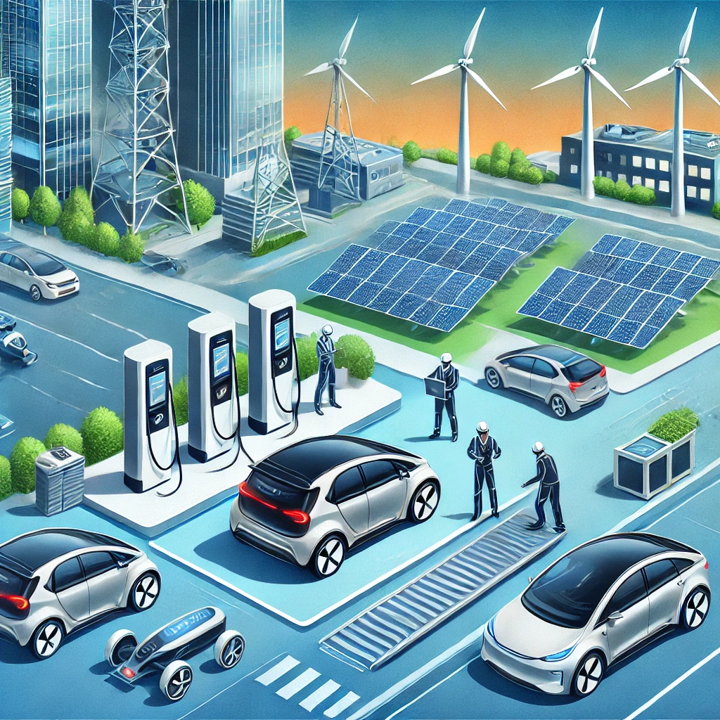
Introduction: The Electric Vehicle Revolution
The electric vehicle (EV) industry is transforming the global automotive landscape. Governments, manufacturers, and consumers are accelerating the shift from traditional internal combustion engines to cleaner, more efficient EVs. By 2030, EVs are projected to account for 50% of new car sales worldwide, making it essential for engineers to adapt to this seismic shift.
This revolution brings opportunities and challenges. Engineers must acquire new skills to design, test, and maintain EV systems, ensuring they are efficient, safe, and aligned with modern technological demands.
The Drivers Behind EV Growth
1. Environmental Concerns: Governments worldwide are implementing stringent emission regulations to
combat climate change.
2. Advancements in Battery Technology: Innovations in Battery Management Systems (BMS) have made EVs
more efficient and reliable.
3. Government Incentives: Subsidies and tax benefits encourage both manufacturers and consumers to
embrace EVs.
4. Consumer Demand for Sustainability: A growing awareness of environmental impact has made EVs more
appealing to consumers.
The Skill Gap in the EV Industry
While the EV market expands, the demand for skilled engineers is outpacing supply. The skills required
are vastly different from those needed for traditional automotive engineering, creating a significant
skill gap.
Key areas where engineers need expertise:
• Battery Management Systems (BMS): Design and optimization of battery systems.
• HIL Testing: Validating EV components such as powertrains and braking systems using real-time
simulations.
• Functional Safety: Ensuring compliance with ISO 26262 to make EV systems safe and reliable.
• Embedded Systems: Developing firmware for EV systems, such as motor controllers and energy management
systems.
• Communication Protocols: Mastery of CAN, LIN, and FlexRay for seamless system integration.
Tips to Stay Ahead in the EV Industry:
Upskill Continuously: Enroll in EV-focused online courses, certifications, and workshops.
Gain Hands-On Experience: Work on internships or projects related to EV components and systems.
Build a Network: Engage with EV professionals on platforms like LinkedIn or attend industry conferences.
Stay Updated: Follow emerging trends like solid-state batteries, wireless charging, and AI for energy management.
Emerging Technologies in EV Engineering
Engineers working on EVs must stay updated on emerging technologies, such as:
1. Battery Management Systems (BMS): Managing battery performance, lifespan, and safety.
2. Autonomous Driving Features: Integrating ADAS and autonomous systems with EV platforms.
3. IoT and Connectivity: Building smarter vehicles connected to the cloud for real-time monitoring and
updates.
4. Regenerative Braking: Developing systems to maximize energy recovery.
How Engineers Can Stay Ahead
To remain competitive in the EV industry, engineers should:
1. Pursue Specialized Training: Gain hands-on experience in tools like dSPACE, CANalyzer, and AUTOSAR
platforms.
2. Master EV-Specific Technologies: Focus on battery systems, embedded systems, and HIL testing.
3. Work on Real-World Projects: Collaborate on simulations or projects that mirror industry
challenges.
4. Stay Updated with Industry Trends: Engage in continuous learning to keep up with the rapid evolution
of EV technologies.
How DPIT Systems Prepares You for the EV Revolution
At DPIT Systems, we equip engineers with the skills and knowledge needed to excel in the EV
industry.
Our courses include:
• HIL Testing and Automation with Python: Hands-on training in validating EV components.
• Functional Safety Engineer (ISO 26262): Practical applications of safety standards for EV systems.
• Embedded Systems: Developing firmware for EV-specific applications.
Each program combines practical projects with guidance from industry experts, ensuring you’re ready to
contribute to the EV revolution.
Join the Future of Sustainable Mobility
The EV industry is growing rapidly, and skilled engineers are essential to its success. Explore DPIT Systems' specialized training programs to gain the expertise you need to thrive in this exciting field.
[Explore DPIT Courses >>]